By Geoff Peck
I wrote about Pittsburgh before I’d ever been there.
I was a junior at Vanderbilt, having recently quit the basketball team, and the Pittsburgh I had in my mind – a hardnosed, this-is-this culture where football was king – seemed like the perfect fictionalized location for the ideas I wanted to work through about masculinity and sexual violence. In effect, Pittsburgh could neutralize, through setting, the complex web of emotions and creativity sparked from my experiences.
As a kid growing up in Oklahoma, I was drawn to Pittsburgh sports after realizing they were the only city whose teams were unified through color. That the black and gold actually meant something, that the Steeler logo on just one side of the helmet was like a trump card to every other city, sealed my fate. My childhood Pittsburgh from afar was Sid Bream’s endless slog around third ending the Bonds and Bonilla Pirates, Lemieux and Jagr’s Pens teaching me the rules of hockey, and Bill Cowher’s Sisyphean climb towards a Super Bowl ending with Neil O’Donnell throwing yet another interception to Larry Brown. A decade later, my decision to start writing after I gave up basketball aligned with Ben Roethlisberger’s rookie season that reignited the Steelers. Then, in February of 2006, Bill Cowher finally hoisted the Lombardi Trophy. Two months afterward, I was accepted into Pitt’s MFA program.
*
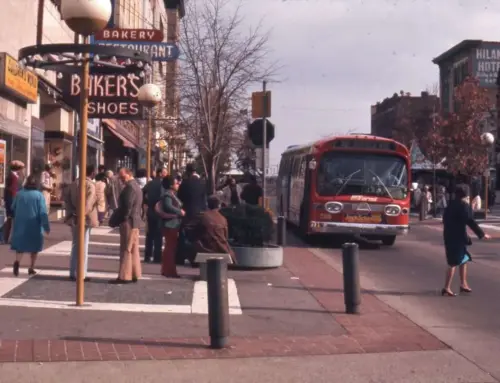
My first month living in North Oakland I got a job in a party goods warehouse. I think of this as my day-to-day Pittsburgh education outside of the academic bubble. I crisscrossed the city and its surrounding areas on deliveries, learning the traffic patterns while getting daydreamy-lost in the wash of truss-work and arches, soot-stained limestone and cold modern glass, the church and dive on every corner. I tracked the sales of Steelers and Pens gear as they made their runs to the Super Bowl and Stanley Cup and worked with people whose family tree, as far as they were concerned, began and ended in Western Pennsylvania.
I knew I wanted to write about Pittsburgh in a meaningful way when I first moved away, but it took me three years before I returned to it through fiction. I had entered the PhD program at the University of North Dakota when I felt the pull of that original scrap of creative writing, my fictionalized and neutralized setting of Pittsburgh, and wanted to capture what Pittsburgh actually felt like for me now that I’d lived there.
But the PhD can be slow work, and by the spring of 2013, I needed to establish the areas of focus for my comprehensive exams, and in particular, my area of specialization. I surprised my professors with what I proposed: American proletarian literature.
The topic was seeded in a lit class I took at Pitt in the spring of 2007: the Radical novel in the Great Depression. The course introduced me to Thomas Bell’s Out of This Furnace, a novel of immigrant labor so striking that it’s taught just as much in American history classes as it is literature. A multi-generational opus of the Pittsburgh mills, one that captures the cruelty and violence of the industrial revolution to crescendo towards the successful unionization of the steel industry, Out of This Furnace gave me an outlet for my initial, abstract obsession with the city and provided insight into a largely forgotten era of American literature.
In one sense, City of Clans is an ode to proletarian literature of the interwar period. The most canonical or well-known American novels with politics at their forefront in the early twentieth century are The Jungle and The Grapes of Wrath, and as a born-and-raised Okie, Steinbeck’s novel has a special place in my heart. But these are novels written by professional writers. The proletarian novels were written by laborers with no formal training, which makes Bell’s achievement with Out of this Furnace even more impressive. It was the last book we read in the course, and after our final class I walked with a friend from the Cathedral of Learning over to Panther Hollow Inn on Forbes Ave where we discussed the novel over a pitcher of Yuengling. Bell’s Pittsburgh was long gone by then, but the city was still full of its echoes. The Pittsburgh built by the long shifts (up to twenty-four hours in some cases) in molten temperatures – the ever-present threat of being liquified in your place of work – all for cripplingly low wages. But it was okay, don’t despair, because Carnegie built another library. As my friend put it that night, every time he saw another building in Pittsburgh being spray washed to remove the decades of soot, he would think of Out of This Furnace and the novel’s central family, the Dobrejcaks; he would think of their legacies being slowly erased.
Quite simply, it made us see the city in a different way.
Eighteen months later, in the midst of the worst economic crisis since The Great Depression, the Steelers won their sixth Super Bowl, and Forbes Ave was overrun by a mob of Steeler fans with cell phones clutched and ready in nearly every palm to capture the spectacle.
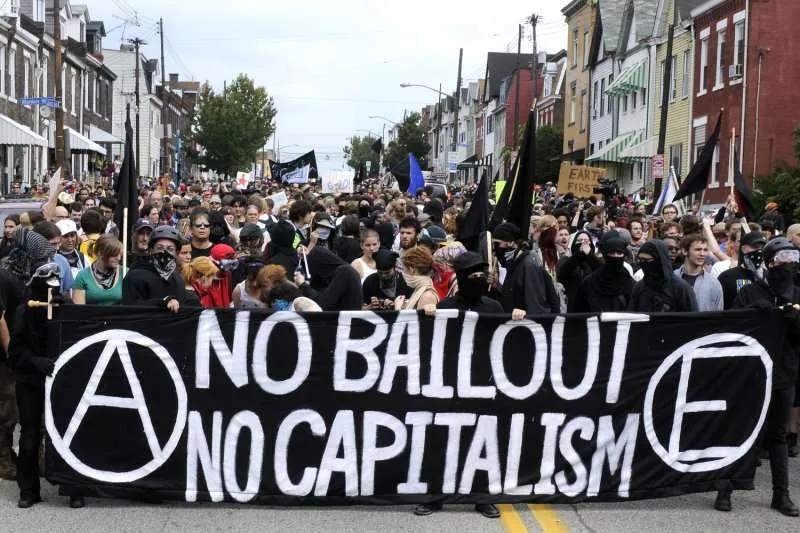
Eight months afterward, in late September of 2009, the world watched as protestors and police clashed for days in the same city streets.
*
Looking back, it’s rather obvious where my renewed interest in proletarian literature came from and how it could intersect with the original story I wanted to tell. What would a proletarian bildungsroman set in Pittsburgh look like in in an age of hyper consumerism and media saturation? When nascent social media was wrapping naïve Millennials around its slick finger? In the 1930s, City of Clans’ protagonist, Jeremy Starcevic, would’ve started work in a steel mill; in 2009, he found a job in a party goods warehouse instead.
*
In the Afterword of The Machine in the Garden, Leo Marx discusses how he initially considered focusing his dissertation, which would become his seminal work of literary criticism, on the proletarian novels of the thirties, but that the more he studied “these earnest, committed novels . . . the more predictable and formulaic, the less interesting, they seemed.” This sentiment is a common refrain when looking back at a genre largely relegated to a literary punch line. As Barbara Foley notes in Radical Representations, the slogan “art is a weapon” was so prevalent in leftist journals and postwar critiques of the movement that Alan Wald called the phrase a “Stalinist homily.”
It became a near universal view that proletarian writers always subordinated art to politics, effectively removing any novel labeled as “radical” or “proletarian” from artistic discussion. At their worst, these novels were so concerned with their critique of capitalism, that they do at times read as propaganda. But the bildungsroman is also the perfect genre to show how one can develop political consciousness, and in the skilled hands of worker-writers like Bell, there were some exceptional proletarian coming-of-age novels. As Foley notes, “students currently approaching proletarian literature with a knowledge only of the postwar critical reputation . . . may be somewhat surprised to learn that quite a few proletarian novels . . . were read sympathetically and evaluated positively when they first appeared.”
Because in the wake of McCarthyism, none of them were spared.
As a writer concerned with politics, this leads to two questions. First, how do you successfully modulate the role of politics in art? And the second, darker question: If cultural forces align against you, does it even matter?
The current, on-going book bannings and attempts at cultural censorship on the right suggests art is still viewed as a weapon. One that has to be disarmed by conservatives through another apparatus that they’ve co-opted: social media.
*
The power of social media in political protests first made world headlines with the beginning of the Arab Spring in 2010 and did so again with the Occupy Wall Street movement the following year. But the event that preceded the two was the 2009 G20 Summit in Pittsburgh, which brought together a wide range of activists, including peace groups like Code Pink, environmental groups like Three Rivers Climate Convergence, a broad swath of labor and social justice organizations, and a legion of students drawn to the spectacle surrounding their campus – a scene eerily reminiscent of the celebratory “riots” that occurred just eight months earlier after the Steelers won the Super Bowl.
Many of the G20 protests in Pittsburgh were coordinated through social media with the group Tin Can Comms Collective using a radio scanner to disseminate information on police movements through Twitter. The use of social media along with the inherent voyeurism the protests created makes the 2009 Summit a particularly important site for a post-2008 bildungsroman. It pairs the rich history of labor struggle and social protest in Pittsburgh with the generation of Millennials primarily defined by their narcissistic use of technology. In the same city as the Pittsburgh Railroad Strike and the Homestead Massacre, the examination of political unconsciousness in America’s youth and their movement towards awareness allows for a rich opportunity in fiction when Heinz Field has become the most photographed landmark and a city’s history is slowly subsumed by a football team.
During the leadup to the G20 in the novel, Katrina Kovacs, a politically active Carnegie Mellon student, makes the hopeful claim that “Twitter is going to change the world.” She’s trying to get Jeremy invested in the summit, and in Kat’s character, I wanted to capture the earnest energy of young activists, particularly in 2009 when hope hadn’t been overwhelmed by cynicism. The original drafts of City of Clans were written before Trump’s first term, when the first signs of Russian interference via social media were still undetected, but it wasn’t until January of 2025 that the novel went through final edits before publication. By then, of course, social media had become a cesspool of misinformation, and American democracy had been stained by January 6th only to be further corrupted by Musk’s purchase, rebranding, and reorienting of Twitter in order to influence the election. The cynicism of 2025 could’ve easily led me to edit out the line.
I chose not to.
This decision wasn’t just about irony, but also because of all the examples since 2009 that illustrate Kat’s point about the way social media has mobilized and given a voice to marginalized groups. One of these examples gets to the heart of City of Clans, and it hit during a time when I had completed a revised draft of the novel but had put it aside, thinking perhaps I was better off keeping this story private: MeToo.
*
Back in 2005, when I was first deciding to take a stab at fiction, I described my thematic interests to a professor as “false masculinity” because I didn’t have vocabulary for “toxic” yet. The examination of sexual violence perpetrated by young men has always been the heart of this project, and while everything else about the novel evolved greatly in the now twenty years since I sat in my professor’s office, the heart of it never changed. Those initial sketches were much darker in tone and outlook, though, and the final version came to incorporate another, much needed theme, one embodied by protest movements past and present: the resiliency of the human spirit. We see this resiliency time and again across the globe in the on-going fight for human rights. Bell captured it through his portrait of steelworkers during Pittsburgh’s previous era, and I hope readers find it in Jeremy and Kat, too.
When my agent, Bonnie Nadell, read the first draft of City of Clans she assumed I was from Pittsburgh. I like to think this had just as much to do with my day-to-day Pittsburgh education as my academic one. With six years of living in the city where I could still get daydreamy-lost in its uniqueness, it certainly felt like home. Still does. So while the academic and artistic challenge might’ve been blending the politics neatly into the art, I’ll also always consider City of Clans a love letter to the city I think of as my second home town. The city where I grew up again.
Geoff Peck teaches creative writing at Winona State University. His poetry has been nominated for Best New American Poets and awarded the Thomas McGrath Prize by the Academy of American Poets. Peck lives in Winona, Minnesota.