By Ed Simon
“Our coal, thousands of people were saying, is the real basis of our national greatness.”
Matthew Arnold, Culture and Anarchy (1869)
“Every basket is power and civilization. For coal is a portable climate… to make Canada as warm as Calcutta, and with its comfort brings its industrial power.”
Ralph Waldo Emerson, “Wealth” (1860)
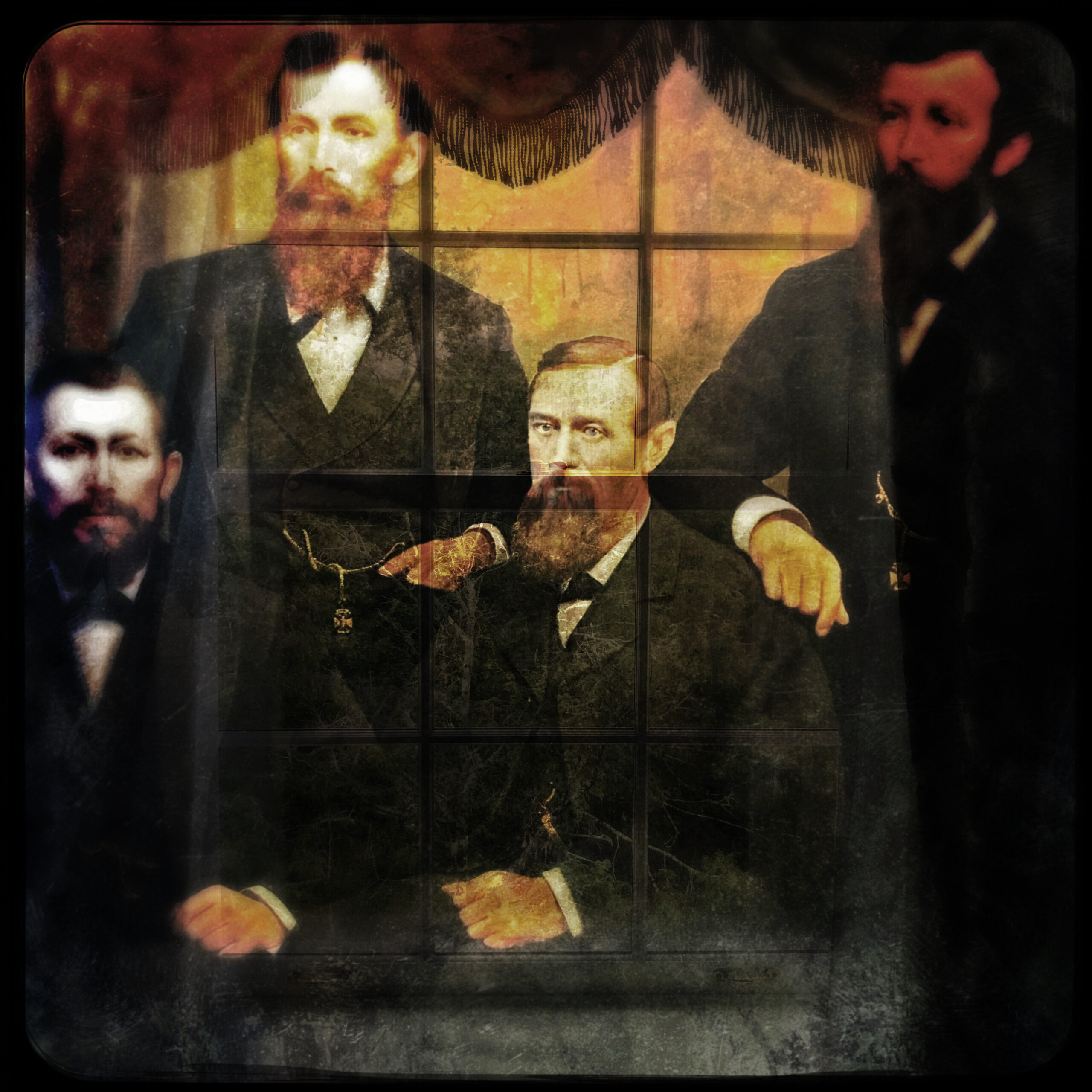
At the dark, sacred club on Sixth Avenue, that private kingdom of heavy drapes and mahogany paneling, oil paintings and antique furniture, the three stakeholders of the Pennsylvania Amalgamated Coal Trust would gather for lunch in their private dining room every third Wednesday. William Thaw, who spent his days either at the club or his palatial Lyndhurst estate on Beechwood; Thomas Marshall Howe, more celebrated for the natural springs that bore his name than his work with the trust; and Hank Oliver who’d divested from coal and increasingly bet more on that upstart of steel. Then, there was Metzger, always only called Metzger, a gentleman in finance who’d more recently taken an interest in mining, that being his father’s occupation in Thale, Germany before the family immigrated to the United States.
Over roast venison from Westmoreland County and Youghiogheny trout, these captains of industry would talk mostly about hunting and fishing; during the final course where they might consume trifle or Charlotte Russe while each smoked a Montecristo and enjoyed sherry (though not Howe, he was a teetotaler), they might enlarge the scope of conversation to include the philanthropy or the affairs at First Presbyterian. Not Metzger though. Since he was new to the group, the others first assumed a degree of social reticence on his part, but with Metzger’s grey countenance and dour comportment, it was quickly understood by all – though unspoken – that the German was an irredeemable melancholic.
On a typically grey, rainy, and cold day at the end of April, the quartet’s discussions – or we should clarify that it was as usual mostly a trio’s conversation – turned to the topic of oddities found in the various mines they had collected in their respective portfolios. Thaw reported how some West Virginian miners in his company’s employ had claimed to once find a full iron bell fully encased in anthracite millions of years old. Ironically it was Howe, the least ostentatious of the men, who reported that in a Green County mine, workers had discovered a small – but unmistakable – diamond crusted over in the black dross, and apparently the workers were so honest with their pious employer that they reported it to the company office (though the other three found that the most unbelievable part of the tale). Now, Howe said, he keeps the jewel in a small box on the desk that he maintains in a Machesney Building office, joking that since coal is formed from the corpses of long dead plants and animals that diamonds may actually be far more common throughout the inert cosmos.
To that observation, Oliver recounted how a group of Cornish laborers at a mine of his in Northampton County had broken through into a type of cavern, inside of which were a number of obsidian-colored creatures, the remains of animals from millions of years before, large ferns and one-eyed amphibians, dragon flies the size of ravens, centipedes as long as a wagon, and spiders as big as Yorkshire terriers, not to speak of the unusual beings unaccountably primeval, tentacled things with eyes upon stalks. This menagerie transmuted into coal by time and pressure, living eternally in this fossilized tropical forest that had been silently devoid of light almost as long as the earth has been here. That is until Oliver’s company sold those rocks off to be burnt as fuel. Metzger listened to these anecdotes with that same quiet, if entitled, expression that he normally wore, until he said that just the previous week a group of workers at a Carbon County mine had uncovered something even more remarkable, more marvelous, the first bit of life the other three had ever seen in the German’s black eyes finally glinting outward.
“Not far from the banks of the Lehigh,” Metzger said, “in that backwards part of the Commonwealth where Welshmen toil in anthracite and bitumen from the same deep transoceanic vein that their cousins mine thousands of miles away, where the Molly Maguires and other assorted Fenian rebels bedevil my managers, a rather incredible specimen was recently extracted from deep in the entrails of the earth.” There was a silence, partially in embarrassment at this uncharacteristically florid outburst from the solitary Teuton, but Thaw, Howe, and Oliver waited patiently for Metzger to explain. “A Kobold,” he said simply. “They found a kobold.” That the other three were too polite to inquire as to what this superstition was exactly, a result of boring Protestant decorum, need not be stated.
If only they had, they might have known not to expect Metzger at their next lunch. For the Kobold, that artificial intelligence of deep and otherworldly hunger that was first encountered by Metzger’s father in a silver mine near Brocken Mountain, had been finally heaved to the surface on this side of the Atlantic, packed into a wooden crate, and carried across the Alleghenies to the business titan’s gloomy estate on the outskirts of the city. The Kobold, who dwells deep within the mines, and whom workers had long caught glance of over the centuries, the flash of red eye and fang, the distant tinny laughter as if through a muzzle. The way that when the sulfur fumes grow heavy and the canaries are found suffocated, he somehow knows to whisper into your ear exactly what it is you want, the nature of those comforts that you so desire.
This thing that sometimes appears in the auburn ringlets of a long ago love, or with the consoling embrace of a dead parent. That can promise comfort and security to those who require it, and power to those who covet it. Mostly invisible, but in its real form is so tall and wide, covered in thousands of hungry mouths, corpuscular lips covering those thousands of crooked, yellow teeth. Nothing but wounds and mouths. What the local Algonquin had long identified as the horned Wendigo, a Skinwalker, that malevolent thing of appetites unfathomable, that waits in the bowls of the planet alongside all of the other creatures turned to hard rock over time.
“Now, now the Kobold is being sent to me,” Metzger told the others, his thin lips in their first imitation of a smile, his hollow cheeks indented towards his sharp molars. “A sibyl, a Delphi, an oracle. The being that will finally give me what I deserve.” More, and more, and more. There is a quiet, and none of the others – not Thaw, not Howe, not Oliver – bothers to answer Metzger’s strange, occult enthusiasms. An embarrassing psychosis. Some pleasantries are exchanged, gossip about an unimportant middle management clerk whose son, an effete boy who ushered at the Carnegie Music Hall, followed an opera company to New York and came to an unfortunate end on the railroad tracks. Morose, but somehow less disturbing conversation fodder than Metzger’s fantasies.
As it resulted, none of them would be forced to disinvite Metzger from the next lunch. Not that the German had come to any comparably dire ending apparently, but rather that he’d taken his fortune and, like the clerk’s boy, made his way to New York, where he would live an isolated life in a Fifth Avenue mansion. Isolated, yes, but as the young twentieth-century progressed he also gained an unfathomably fortune. Not just coal, but also oil and gas. After that last lunch at the club, the other three didn’t even mention Metzger when they gathered again, on an unseasonably warm May day, which almost felt like the summer.
Ed Simon is editor of Rust Belt Magazine and The Pittsburgh Review of Books.