By Jennifer Bannan
It is 1975 and I’m 6 years old, and we’re on my dad’s swamp buggy in the Florida Everglades. My dad is saying “They’re no good, they’re invaders.” We have many to pick from, these maleluka trees, as we survey this strand of them right off the Tamiami Trail.
Dad is revving the engine of the massive buggy that he built with his ingenuity at age 18. My mom is gripping me tight. My sister is whooping behind us, standing in the cargo bed and holding on.
And then Dad unleashes the buggy, letting it lunge forward. The tree, flanked by its multitude of relatives, all of them standing in an executioner’s line, can only wait for impact. We picked this one because it’ll present a challenge, not so big it won’t go down, and not so small as to be anticlimactic.
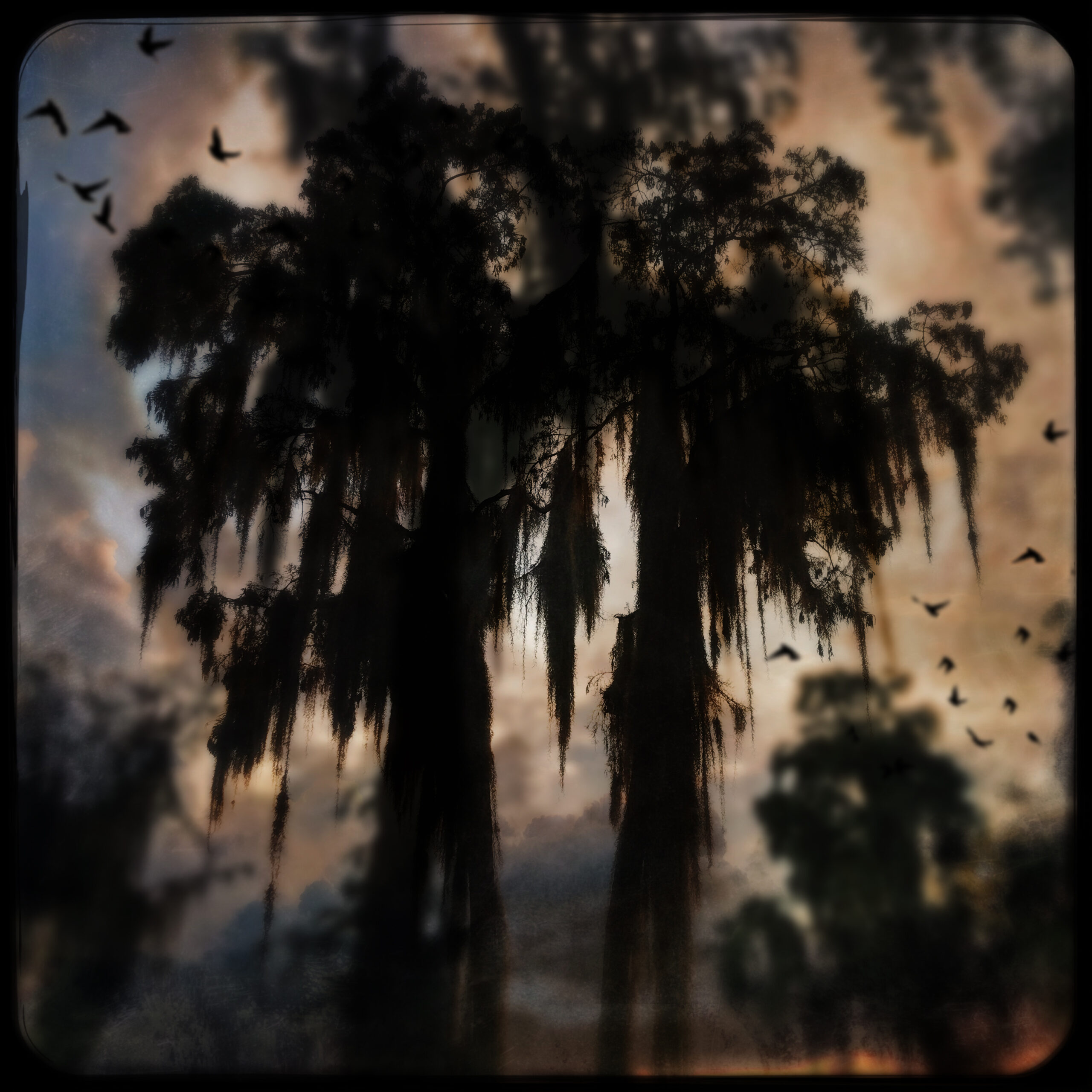
Bam! The first hit, and the maleluka shudders, and we all shudder. The rustle of leaves sounding desperate, like it’s searching its body for something that might change our minds. And my dad yanks at the gear shift, reverses, revs. And Bam! We hit the tree again, bouncing in our seats. The silver leaves rustle violently, and we’re bathed in the scent of eucalyptus. It’s a tree from Australia, my dad has explained. It’s taking over the Everglades. It drinks up the water and it will kill the cypresses if they let it. If we let it. I look further out across the prairie, at a stand of cypresses. Poor threatened cypresses. Why do they all, the malelukas and the cypresses, feel like families to me?
—
Fifty years later, I’m traveling in Peru and have admired a eucalyptus growing on the slopes of mountains, around streams. I learn on Google that someone introduced it because there were no building supplies in the area, only a tree in the rosebush family that grows so slowly as to be almost pointless. No kind of progress has that kind of time. But now the farmers need help to control this species that threatens their crops. Because of this water hogging tree, the ground won’t have enough of the melt coming down from the mountain glaciers.
The Tasmanian Blue Gum gets me wondering: Who was the guy who introduced the maleluka to the Everglades? I learn his name is John C. Gifford, the first person to hold a doctorate in forestry, his name used for a wildlife preserve at the University of Miami. A problem solver, a guy who knew of a thirsty tree.
I picture him coming back and surveying his work. In my mind he smokes a pipe, he has suspenders. He is wearing boots and he doesn’t seem to see my family nearby on our swamp buggy. Does he look disappointed? Can he see those conservation workers, pulling the maleluka shoots out of the ground by hand, in the blazing sun, like they’ve been doing now for decades, ever since they learned that chopping them down or burning them only causes more maleluka proliferation? Should he try to explain himself to the workers? About the need for dry land, for development, for money?
Eventually the researchers and foresters and even the politicians would realize draining the swamp was a bad idea. They changed course. That was almost thirty years after Gifford had died in his Coconut Grove home.
Mr. Gifford might mention to those shoot-pullers, as he surveys their efforts to offset his damage, that he’d had some help. There were the canal systems, don’t forget, that robbed the Everglades of the precious trickle of water that makes the land unique. “But you like Miami Beach, don’t you? You think any of that would have happened if half the state was still flooding every couple of years?” And now he’s glancing at my family up here on the buggy, hoping for reinforcement.
Dad revs his engine. Mr. Gifford grabs the buggy bars, puts a boot on the massive wheel, heaves himself up beside us. And I think about the mistakes we have to live with, how by now we’ve learned to live with the maleluka trees, accepted that the workers will never get to every shoot. Accepted that the canals remain all over Florida, working on some compromise that allows the Everglades enough water to stay a National Park.
But, if we could just prevent those new mistakes. Like, right here on the plains of the Everglades, right where my dad attacked the malelukas. A big beautiful detention center. With the idea, I suppose, that there is a take over to confront.
If only there was a way to stop. To think about what’s taking over what, who’s taking over whom.
We don’t have solid proof yet that this detention center is all wrong, any more than Dad had proof 50 years ago about the malelukas. It’s just something we feel in our bones.
The cypress families, the maleluka families, the cluster of researchers pulling shoots, our family on the buggy with our ghost Mr. Gifford, the Miccosukee families taking the government to court over this land, the worried families in South America, trying to make contact with the detained.
That barbed wire fence, those support poles, that guard house, those barracks. Dad and his buggy. Revving.
Jennifer Bannan’s credits include a collection of short stories, Inventing Victor, as well as stories in anthologies and literary journals like the Kenyon Review online, ACM, Passages North, and Chicago Quarterly Review. Her collection of short stories, Tamiami Trail, is forthcoming from Carnegie Mellon University Press, in Fall 2025.