“The Blocks set fire to the 125-year-old legacy established two generations earlier by journalists who bore the same family name, but took their mission to be bulwarks against civic ignorance and misinformation more seriously than their descendants.”
By Tony Norman
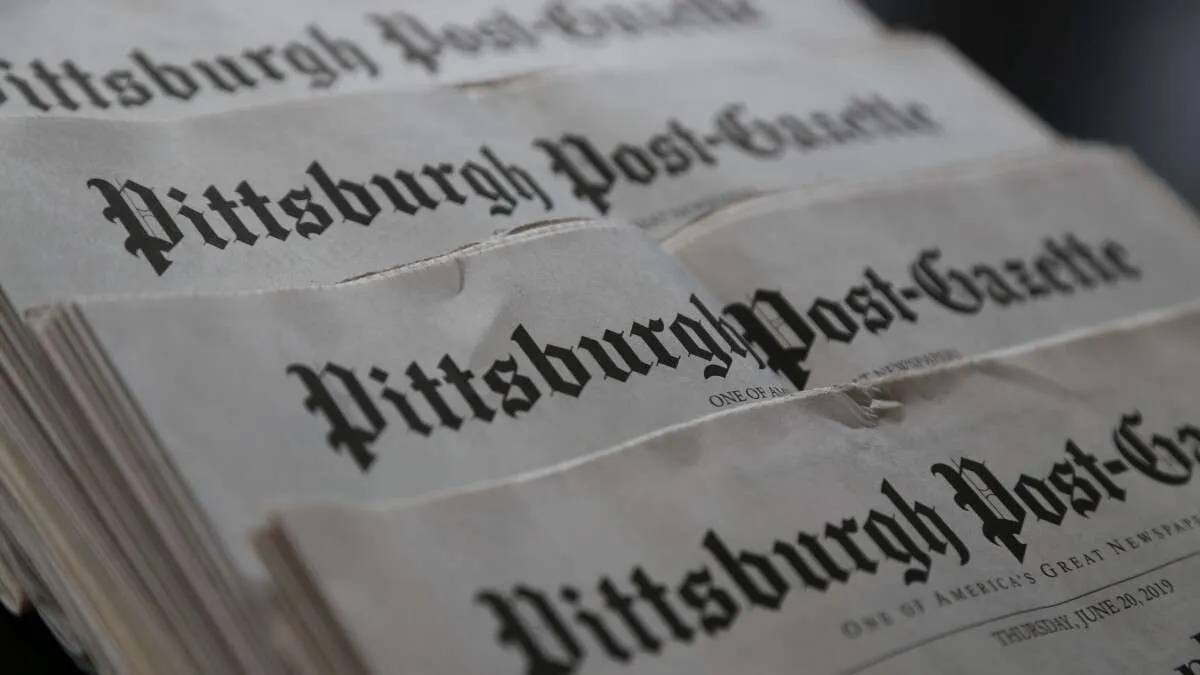
On January 7th at 1:15 p.m., John Robinson Block and Allan Block, the 71-year-old twin co-publishers of the Pittsburgh Post-Gazette, the largest and oldest Pennsylvania newspaper west of the Alleghenies, shut down the Pulitzer Prize-winning jewel in its media empire with a two-minute pre-recorded Zoom announcement.
In doing so, the Blocks set fire to the 125-year-old legacy established two generations earlier by journalists who bore the same family name, but took their mission to be bulwarks against civic ignorance and misinformation more seriously than their descendants.
There was no opportunity for a Q&A with the nearly 190 employees who attended a virtual meeting called with 45 minutes advance notice. The reporters and editors staring at their screens likely assumed they would be subject to just another round of threats and rants from the Death Star in Toledo. Very few expected the apocalypse to descend in such an impersonal way.
While rumors of a complete shutdown and cessation of publishing has been part of the fabric of work life at the PG since the 2010s, the assumption was that JRB would always side with the faction that prefers to keep the paper open.
The thinking was that JRB is self-aware enough to know that there are no other comparable opportunities for him to garner a similar level of influence in Pittsburgh. This region is already home to millionaires whose wealth dwarfs the Blocks, but owning a newspaper with such a historic pedigree conveys an additional status money can’t buy.
It has also been assumed that even a troubled asset like the PG that has lost $350 million over the last two decades according to the Blocks, could be turned around by a savvier owner’s group not bound by an incompetent management style, a revulsion toward organized labor and the kind of unimaginative thinking that led to the longest strike in American history.
So May 3 is the day that the Blocks have announced they’re going to pull the plug on what was once an indispensable regional asset. With little more than a pre-recorded announcement by a corporate mouthpiece most PG employees couldn’t pick out of a police lineup, the storied history of the PG officially comes to the most ignoble end imaginable.
Once the disappointment has dissipated and the trauma of the last decade and a half of corporate mismanagement has begun to retreat from collective memory, blistering accounts of what happened at the PG during the Trump years will begin to emerge in self-published memoirs, author-centered newsletters, novels and various public platforms. It won’t be pretty, but it will be hilarious.
The last two decades of “One of America’s Great Newspapers” is too absurd, too tragicomic and too cautionary a tale about horrible business and labor decisions to be left to the vicissitudes of the academic imagination to reconstruct.
The collapse of the PG is potentially one of the spiciest and instructive stories in modern journalism, but it has lacked sufficiently charismatic narrators or the kind of critical reporting from the outside capable of attracting the attention it deserves.
Telling the PG’s story with any kind of truth requires the sharp and sympathetic analysis of people who were actually there when much of the journalistic shenanigans and managerial malfeasance went down.
It is also a morally complex story (as most truly human stories are) that is difficult to narrate because lead players are mutually compromised even before they engage in battle.
In my fantasy, I picture a series of interconnected oral histories by the PG’s best past and present writers, editors, columnists and staffers from copyeditors down to clerks, videographers, librarians and freelancers.
It would be a three decades long chronicle beginning in the ‘80s when many of the most interesting talents from Mark Madden and Andy Sheehan to Barry Paris and Barbara White Stack began appearing on the scene.
Imagine a two-fisted narrative of the PG from the perspective of an investigative juggernaut like Bill Moushey or a poetic narrative odyssey by Diana Nelson Jones or a careful dissection of the Newspaper Guild of Pittsburgh’s best and worst strategies along the way by Jon Silver or an audacious examination of class consciousness and interpersonal relations at the paper by Mackenzie Carpenter.
Imagine the sheer literary delight of Dennis Roddy chronicling his own misadventures, idiotic pranks and battles with PG management or an explanation of how the middle American skepticism of Mark Belko became the defacto voice of the PG when he practically owned the front page by breaking big development stories every day.
What kind of newspaper would the PG have become if not for the innovative spit-balling of Mila Sanina in a newsroom ever resistant to technological change?
How did the most misanthropic collection of sports writers in the Commonwealth put out the best daily sports section year after year?
How was the PG able to consistently punch above its weight class and beat much larger papers like the Philly Inquirer in annual journalism competitions? Why was a newsroom anarchist turned business writer like Ann Belser always proven right about everything?
I’m desperate to read a judicious and balanced assessment of what went wrong at the PG after the death of Bill Block, Sr., by someone of the caliber of Rich Lord or how the progressive energy of the John Craig, Jr. years as interpreted by Mark Roth fostered the resentment of the Block brothers when they inherited their uncle and grandfather’s kingdom.
I admit to being something of a romantic when it comes to the PG that I joined in Nov. 1988, a year after moving to Pittsburgh, getting married and casting about for a work identity that fit my limited talents.
Getting hired by the PG just before our first child was born provided my family with a solid launch into Pittsburgh’s middle class thanks to a fat union paycheck and a plethora of benefits. I was beyond grateful when it happened. My veins were about to collapse forever after donating blood in East Liberty every other weekend to subsidize a meager paycheck from telemarketing.
Because we were all so well compensated as staff writers and editors, there was always an internal incentive to appear interesting. Boring readers was not an option.
It was such a heady time, I couldn’t imagine the good times ever ending. But they did end. Looking back, I can see I was part of the last generation of writers who could arrive at a newspaper without an appointment with portfolio in hand, get a quick review by whatever editor was available and either get an assignment that day or a polite “no thanks” and an invitation to try again in six months.
Since I’ve never worked for any other daily newspaper except the PG, I have no idea how normative my experience was in 1988, but that’s what happened to me.
*
More than one of my friends and former colleagues has made a very salient point since Wednesday’s announcement that the PG actually “died” a long time ago (even before the firing of editorial cartoonist Rob Rogers and the right-wing tilt of a once center-left editorial board became undeniable), so the announcement of its official shut down in early spring is anticlimactic at best.
While mourning the May 3 shutdown, I tend to agree with this assessment to some extent. I quit the paper in the summer of 2022 many months before the strike because I was demoralized by its drift towards Trumpism and its abandonment of decades of centrist-to-liberal precedent on the opinion page.
Emotionally, many readers made a conscious break with the family-run newspaper once it went MAGA and began shilling hard for Trump despite being headquartered in a blue region of what was formerly known as the rust-belt.
Below, I’m re-publishing a very poignant representation of such an opinion by one of my best friends and former colleagues, but I’m withholding his name because I don’t have his formal permission to print this. I present it here only because it mirrors many of the messages I got on Wednesday afternoon. It is part of a thread between three former PG writers shaking their collective heads at a foreseeable disaster.
“I must admit, even though part of me is stunned and saddened, I am not really feeling too sorry for what had become of the Post-Gazette,” my friend writes.
“Whereas the final physical death of the PG will happen in May, the real PG died a number of years ago. I mean, it’s not easy to say now but it’s the truth. I do feel for a number of good people that are still at the paper, and what will become of them, and having to pick themselves up because of this.
“But from a standpoint of whether I considered the PG a serious paper, I’m sorry to say, I didn’t. Hell, much of the time I read PG stories and I go away from them completely unchanged and uninspired.
“What it had become, though, is a repository for unfiltered hateful vitriol, which it traded in daily. On [that] score, I’m not sorry at all for its demise. In fact, the best I can feel is indifferent. At worst, I’m thinking, good riddance.”
I’m not as down on the existential value of the PG as my buddy is, but I understand his frustration. I’ve seen his resentments mount over the years. I just happen to be a wee more optimistic about the ultimate fate of journalism in Pittsburgh.
No, I don’t believe the collapse of the PG signals the end of journalism here or the beginning of a news desert. The fact that the PG held on for so long after its viability came into question has hindered the birth of the next stage in news gathering that I believe is ready to appear on the scene.
This is a theme I’ll be exploring indefinitely in coming posts.
*
Lately, I’ve gotten into the habit of writing obituaries if I write anything on social media at all. I’m at the stage of life when friends, loved ones and acquaintances are shuffling from this mortal coil with a regularity and inevitability that still manages to surprise me.
Most of the time I don’t know what to say because there are more cliches swirling around in my head than rich stories worth repeating about the dearly departed. Better to say nothing during those circumstances when the imagination comes up short, I figure. Extending sincere condolences to those left behind beats an awkward anecdote every time.
Recently, I’ve noticed that texts announcing the passing of a good friend or a former colleague I rarely talked to arrive on my phone at least twice a month. Since it is always a crap shoot accessing my Pittsburgh Post-Gazette electronic subscription when I actually want to use it, I don’t see obits regularly.
That’s where folks like my pal, noted podcaster, social/political influencer and advocacy journalist Natalie Bencivenga come in.
Recently, Nat sent me an obit about former PG editor Timothy J. McDonough that I had missed completely because, well, my electronic PG subscription sign-on hates me.
Tim McDonough, 68, who died of a heart attack at his Highland Park home on the last day of the year, always impressed me as the most unflappable of night (and day) editors.
I rarely witnessed McDonough bullshitting like so many of his fellow editors, but I didn’t know him well enough to have a sense of what he was like before I wandered over to the City Desk to snatch a slice of pizza. He could’ve been juggling fiery axes before I showed up, but when I did make it over there, he was usually locked down editing copy.
I regret that in the decades we worked together, we had less than a half dozen conversations. None of them stand out particularly. I had no sense of his politics or whether he read my column or what he thought of anything. He was always friendly, which was all I really cared about at the time.
My overwhelming memory of McDonough was of him smoking behind the PG’s building on the North Shore whenever I staggered to my car at the end of the day. He was usually alone.
I vaguely remember him pacing at times. It didn’t really matter whether it was as hot as Venus in that parking lot late at night or as cold as the dark side of the moon, McDonough took regular cigarette breaks.
It occurred to me one evening that Publisher John R. Block always parked his car a few spaces from the back door where McDonough used to stand smoking daily. He never seemed to be intimidated by the fact the publisher could come out the door at any second and witness him violating the ultimate lifestyle rule.
For the uninitiated, JRB is a notorious anti-smoking zealot who (allegedly) decreed that the PG wouldn’t hire smokers knowingly if the habit was discovered during the interview process. This applied primarily to new hires.
Veteran journalists were grandfathered in, but JRB still considered smoking the most disgusting of human frailties. For his part, McDonough didn’t seem to care or take his opinion into consideration. He never tried to hide the cigarette smoke or do anything discreet with it when JRB came within a few feet of him. In that sense, Tim McDonough was the most subtle of badasses. He was a quiet rebel who knew enough to keep his rebellion on the down low. As long as he got his primary job done by the end of each shift, there was nothing anyone could say to him.
Years before Covid when he still made regular forays into work, I made a point of watching JRB walk into the building while McDonough was standing by the door smoking. I didn’t see either acknowledge the other, as if they were conducting themselves according to the rules of some long ago determined detente only they were privy to.
McDonough made a point of looking down when he smoked, so it is possible he was simply lost in thought, but I really suspect he didn’t give a shit what an eccentric newspaper publisher who got his kicks being a tobacco teetotaler thought of him. Even though I didn’t know for sure what I was witnessing, I was impressed with McDonough’s moxie. He was not a hypocrite. He wasn’t interested in hiding who he really was.
My former colleague Kris Mamula wrote a beautiful and substantial obit that appeared in the Jan. 3rd edition of the PG. Kris managed to get testimonials from top PG editors past and present about McDonough that emphasized his knowledge of every pocket of the Pittsburgh region and his grasp of the details of every story he edited. Apparently, he got nothing but raves as an editor.
Much of the obit testimony ran the gamut from “the smartest guy in the newsroom” to the PG’s most well-versed reader of history and poetry to admiration of him as a natural empath who “could gauge the seriousness of a police call on the office scanner just by the dispatcher’s tone of voice.”
When I read Mamula’s obit, all I could think about (selfishly) was how I missed out on getting to know a fascinating colleague who occupied a space in the PG newsroom I never knew existed. Even Natalie B., who is very particular about whom she associates with, is a McDonough fan.
I suppose I took Tim McDonough for granted because I assumed he was the kind of introvert I would have a hard time relating to. I didn’t know we had things in common like a love of books and history. These are things you can only discover once you open yourself to the possibility of being friends with someone in ways that go beyond superficial workplace etiquette.
If I ever find myself in a newsroom workplace setting again, I’m definitely going to make sure that the next Tim McDonough doesn’t slip by me in a haze of cigarette smoke.
Tony Norman is an award-winning columnist, associate editor and feature writer who worked at the Pittsburgh Post-Gazette for over three decades. He now freelances for several local and national publications. He lives in Swisshelm Park on Pittsburgh’s East End.