The Post-Colonial Theory of the Rust Belt
I regularly read Slate. I regularly read a raft of publications that are based in D.C., New York, San Francisco and other coastal cities. I have written for Slate and many national publications as well.


I regularly read Slate. I regularly read a raft of publications that are based in D.C., New York, San Francisco and other coastal cities. I have written for Slate and many national publications as well.

Documentaries about artists can go wrong in a million different ways. Take John Maloof's recent Finding Vivian Maier, which is more a film about Maloof's transformation from a ragpicker into the self-appointed keeper ...

Dawn Weleski was on a flight to Houston to attend a conference when she got word that Conflict Kitchen, the critically acclaimed restaurant-qua-public art project she runs with Carnegie Mellon art professor Jon Rubin

Belt sat down with decorated poet Rochelle Hurt to talk about her recent collection of prose-poetry, The Rusted City, published by Buffalo-based White Pine Press earlier this year.

Amy Jo Burns is the author of Cinderland, a memoir about coming of age in a small town in Western Pennsylvania while carrying the burden of a lie.
I met Noah Vaughn around 1991 at Chicago’s School of the Art Institute, in figure-painting class. His artwork has always been about the urban environment — its transition, its transformation, its decay.
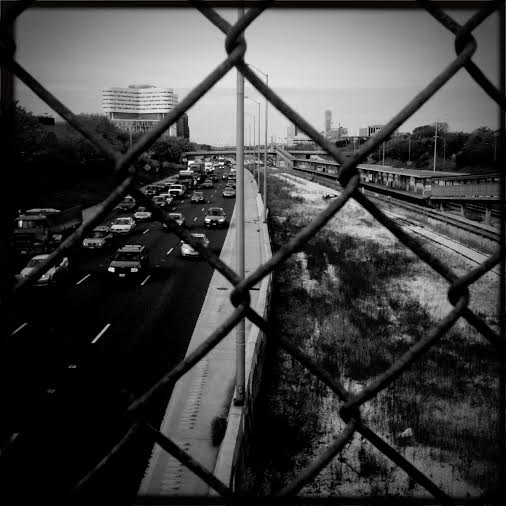
“I Used to Live Here” is a collaborative essay and set of images about cities and how they can and cannot be archived or preserved by Mexican artist and writer Veronica Gerber Bicceci and American writer Kathleen Rooney.

In 1976, police in the Cleveland suburb of Euclid were after what they considered perhaps the most wanted man in their city, a teenager who wasn’t exactly the kind of criminal who would show up on FBI posters inside the local post office.

What images first come to mind when you hear the word “Appalachia”? No, really. The first image? One of the things I like to do in a group setting, particularly with students, is run through this exercise. I explain that there is no right or wrong answer.

The critics were brutal. Headlines called it a “fizzle,” a “fiasco,” and “a total bust.” Some 30,000 people had gathered on the banks of the Chicago River in the city’s downtown on the night of October 4, waiting to see three floating houses set ablaze.

My mother gave me a harmonica for my thirteenth birthday. The first song I learned was “Old Black Joe.” I played a lot of ditties like that – easy major key tunes – throughout junior high and high school.

In August, I arrived at the Cleveland Museum of Art carrying a slim book with a library binding - the original Handbook of the Cleveland Museum of Art, first published in 1925, which promised “a brief description of the museum, its collections, and its works.”